
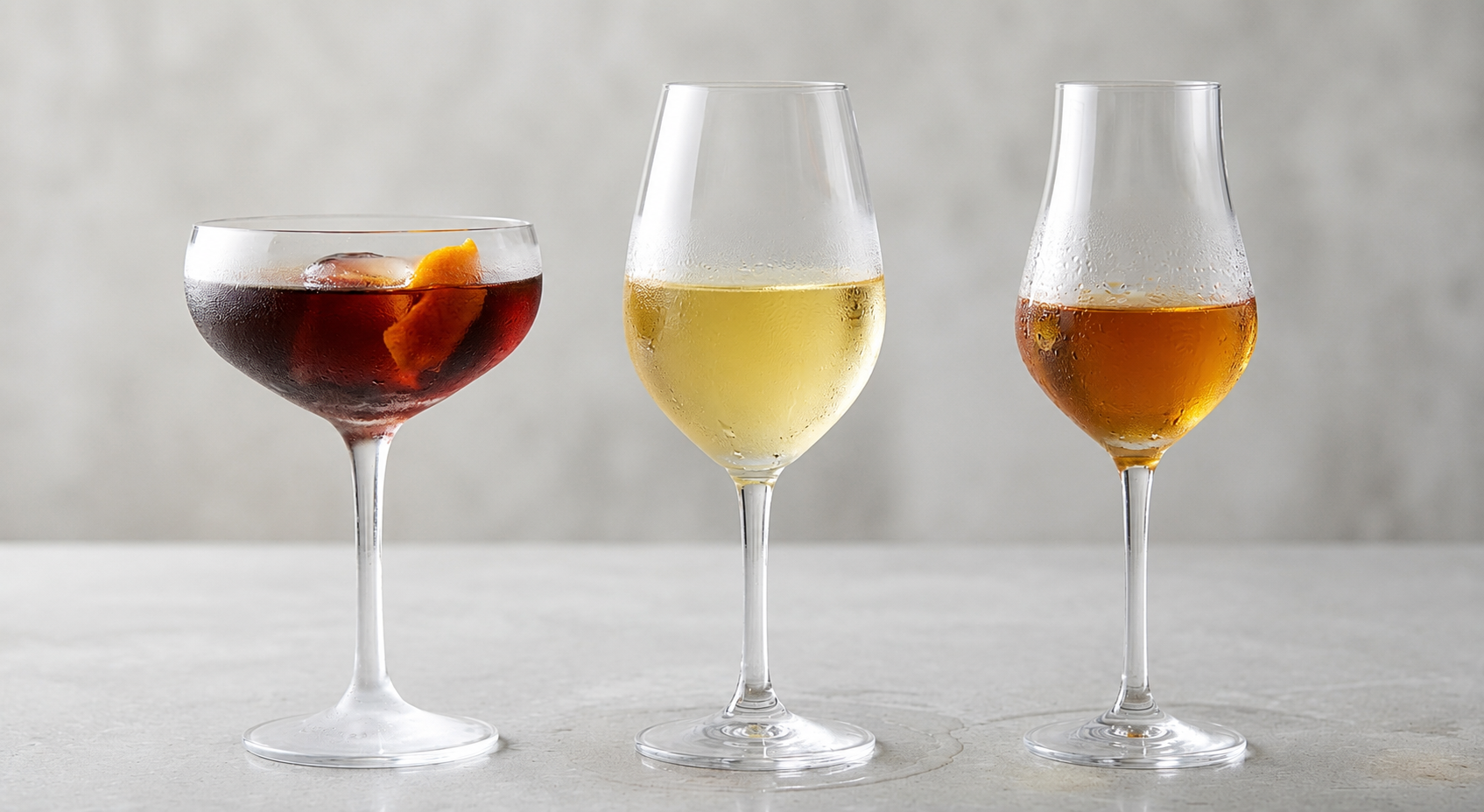
When we talk about enjoying a good wine, we tend to focus on the grape variety, the vintage or the type of glass. However, there is one factor that has a decisive influence on the tasting experience and which, particularly in summer, is often overlooked: the serving temperature.
With over 85 years’ experience in producing sweet wines, at Bodegas Mamerto de la Vara we know that just a few degrees can make a big difference to the tasting experience. That is why serving temperature is one of the recommendations that always accompany our wines, particularly during the warmer months of the year.
Although it may seem like a minor detail, serving wine at the right temperature allows you to enjoy a much more balanced tasting experience that truly reflects the characteristics for which it was produced. Understanding how this factor influences the wine is the first step towards getting the most out of every wine.
WHAT SENSORY ASPECTS ARE AFFECTED BY TEMPERATURE?
Temperature has a direct influence on several factors that affect the perception of wine:
-The volatility of aromatic compounds, which are responsible for the aromas we perceive on the nose.
-The perception of alcohol, which may be more or less noticeable depending on the temperature.
-The balance between sweetness, acidity and freshness, which alters the overall sensation during tasting.
WHAT HAPPENS WHEN WINE IS TOO WARM?
As the temperature rises, various sensory changes occur:
-Greater aromatic intensity: The rise in temperature encourages the release of volatile compounds, making the aromas more intense.
-Greater sensation of alcohol: Ethanol also becomes more volatile, so the alcohol takes centre stage both on the nose and on the palate, and may even mask other nuances of the wine.
– Reduced sensation of freshness: High temperatures enhance the perception of sweetness and diminish the sensation of acidity, making the wine seem heavier and less refreshing.
WHAT IF THE WINE IS TOO COLD?
Excessive cold also alters the tasting experience, albeit in the opposite way.
-Reduced aromatic expression: Low temperatures reduce the volatility of aromatic compounds, meaning the wine displays less intensity on the nose.
-Greater sensation of freshness: As the perception of alcohol and sweetness diminishes, the acidity takes centre stage, imparting a fresher and livelier sensation.
-Greater firmness on the palate: The cold increases the sensation of tension and structure, making the wine seem more compact and less full-bodied.
SUMMER: THE GREAT ENEMY OF SERVING TEMPERATURE
During the hot summer months, maintaining the right temperature is particularly tricky.
Once poured, wine begins to warm up quickly due to the ambient temperature and contact with the glass.
Within a few minutes, a wine’s temperature can rise, significantly altering its sensory profile.
For this reason, in summer it is advisable to serve wine slightly cooler than the target temperature, so that it reaches its optimum temperature whilst you are enjoying it.
RECOMMENDED SERVING TEMPERATURES
Our extensive experience as producers of vermouths, mistelles and muscat wines enables us to offer some practical recommendations for serving these wines in the best possible conditions.
Maintaining the correct temperature is essential for enjoying all their sensory qualities.
VERMOUTHS
– Serving temperature: between 6 and 10 ºC.
-Can ice be added? Yes. When enjoyed as an aperitif, one or two ice cubes help to maintain the temperature without significantly affecting its characteristics.
MISTELLE AND MUSCAT WINES
-Serving temperature: between 8 and 11 ºC.
-Is it advisable to serve with ice? No. Dilution reduces the intensity of the aromas, one of the main attributes of these wines. Alternatively, it is preferable to chill the glass beforehand.
TEMPERATURE IS ALSO PART OF THE EXPERIENCE
Serving wine at the right temperature is not a matter of etiquette, but a way of fully enjoying all its sensory qualities.
Particularly in summer, controlling the temperature by just a few degrees can make all the difference between a balanced, fresh and expressive wine, and one in which the alcohol overpowers the palate or the aromas are masked.
Because, ultimately, a good wine begins long before the first sip.
You can view our full range of bottled sweet wines here: