
Cold stabilisation is one of the most widely used techniques in oenology to ensure the stability of wine before it is sold. Although many consumers may be surprised to see small crystals forming in a bottle, this is a completely natural phenomenon linked to the composition of the wine.
Below, we explain what cold stabilisation is, how it is carried out and why it is important in the production process.
WHAT IS COLD STABILISATION?
It is a winemaking technique for tartaric stabilisation that involves cooling the wine in a controlled manner to cause tartaric salts to precipitate and prevent the subsequent formation of what are known as ‘wine crystals’.
The main aim of this process is to achieve greater physico-chemical stability in the wine, reducing the possibility of such precipitation occurring once the product has been bottled and is in the hands of the consumer. This is a standard procedure carried out during the final stages of production, prior to bottling and the marketing of the wine.
WHAT ARE ‘CRYSTALS’ IN WINE?
When small crystals appear in a bottle of wine, this is neither a fault nor a sign of a decline in quality. These are tartrate crystals that form naturally from the tartaric acid and potassium present in the wine.
WHY DO CRYSTALS FORM?
Wine naturally contains tartaric acid, potassium and other mineral salts. Under certain conditions, particularly when the temperature drops, some of these substances become insoluble and precipitate.
When the temperature drops:
–The solubility of certain salts decreases.
-Potassium bitartrate precipitates.
–Visible crystals form.
The colder the wine is, the greater the possibility of this precipitation occurring.
For this reason, wines stored or transported at low temperatures may develop these crystals if they have not been stabilised beforehand.
FACTORS AFFECTING TARTAR STABILITY
Tartaric stability is not the same in all wines. Each wine behaves differently when exposed to cold due to its specific composition.
The main factors that influence this include:
–The composition of the wine.
–The potassium concentration.
–The level of tartaric acid.
–The pH.
–The alcohol content.
–The storage temperature.
The combination of these parameters determines each wine’s tendency to form crystals and, consequently, the need for and intensity of stabilisation treatment.
HOW IS COLD STABILISATION CARRIED OUT?
Cold stabilisation is developed following a series of controlled stages:
1. Wine cooling: The wine is cooled to temperatures close to 0 °C or even lower, depending on the characteristics of the product and the desired outcomes.
2. Low-temperature ageing: Once the desired temperature has been reached, the wine is kept at that temperature for several days to encourage the precipitation of tartaric salts.
3. Crystal formation and precipitation: During this period, crystals form and settle at the bottom of the tank.
4. Removal of precipitates: Finally, the precipitated crystals are removed by decanting or filtration, leaving the wine stabilised and ready for the next stages of the process.
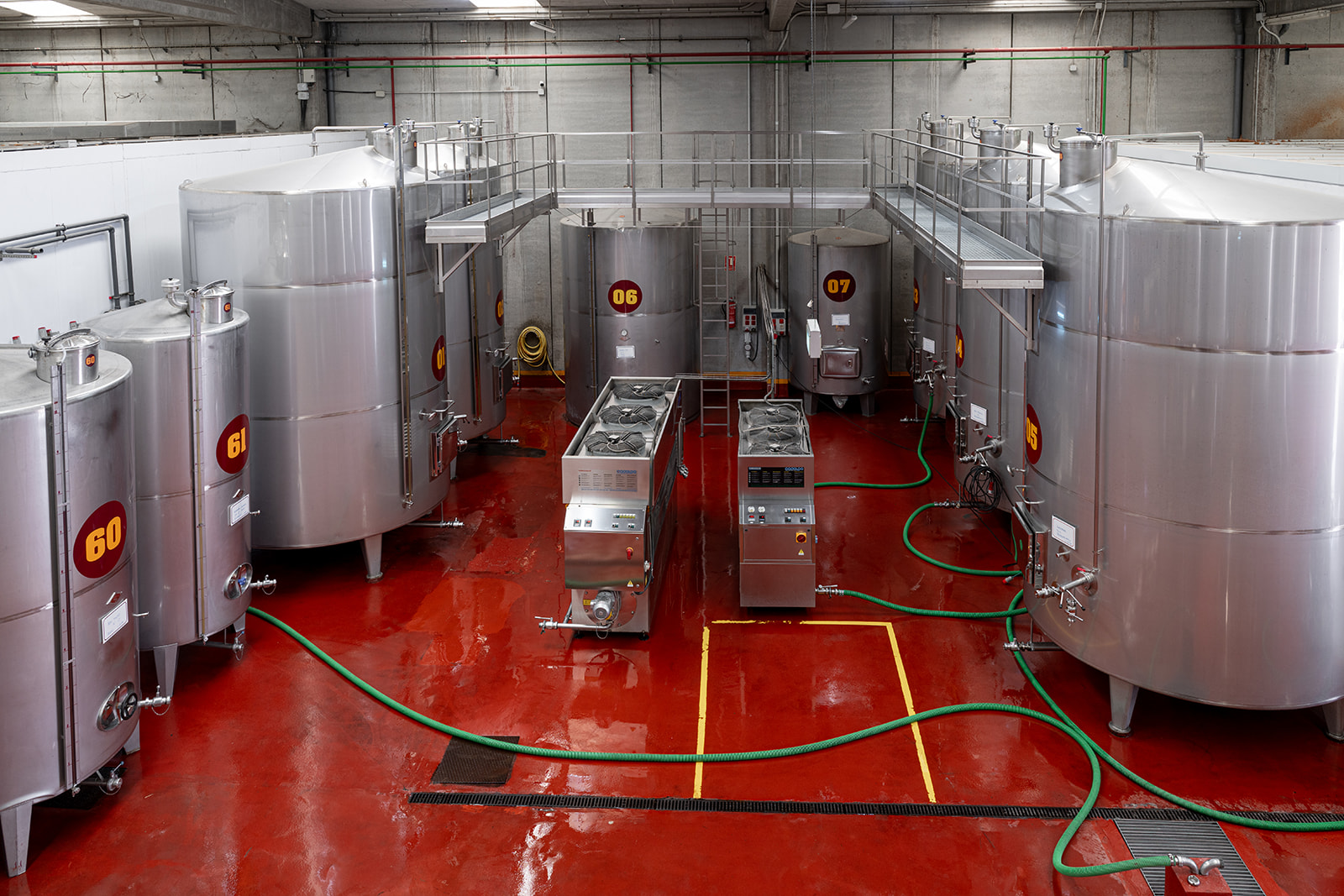
The correct implementation of these processes requires specific refrigeration equipment and tanks designed to maintain controlled temperatures over prolonged periods, ensuring adequate tartrate precipitation and effective stabilisation of the wine.
OBJECTIVES
The use of this technique has several key objectives:
-To improve the stability of the wine.
-To control tartaric precipitation.
-To homogenise the product.
-To prepare the wine for different storage and transport conditions.
As a result, the formation of crystals is minimised throughout the wine’s shelf life, ensuring greater product consistency.
COLD STABILISATION PLANT AT OUR FACILITIES
Proper tartaric stabilisation of wine requires not only oenological expertise, but also facilities capable of maintaining precise and controlled working conditions.
At Bodegas Mamerto de la Vara, we have a cold stabilisation plant with a capacity of over 1,000,000 cooling units per day and space to process up to 130,000 litres in isothermal tanks.
This infrastructure enables us to carry out stabilisation treatments tailored to the characteristics of each wine, ensuring efficient control of the process and proper preparation of the product for storage, transport and sale.
Our facilities in Cheste (Valencia), Spain, are designed to offer comprehensive solutions to wineries and operators in the wine sector, combining production capacity, technology and oenological expertise.
You can find out more about our facilities in this post and discover all the services we offer at Bodegas Mamerto de la Vara via this link.